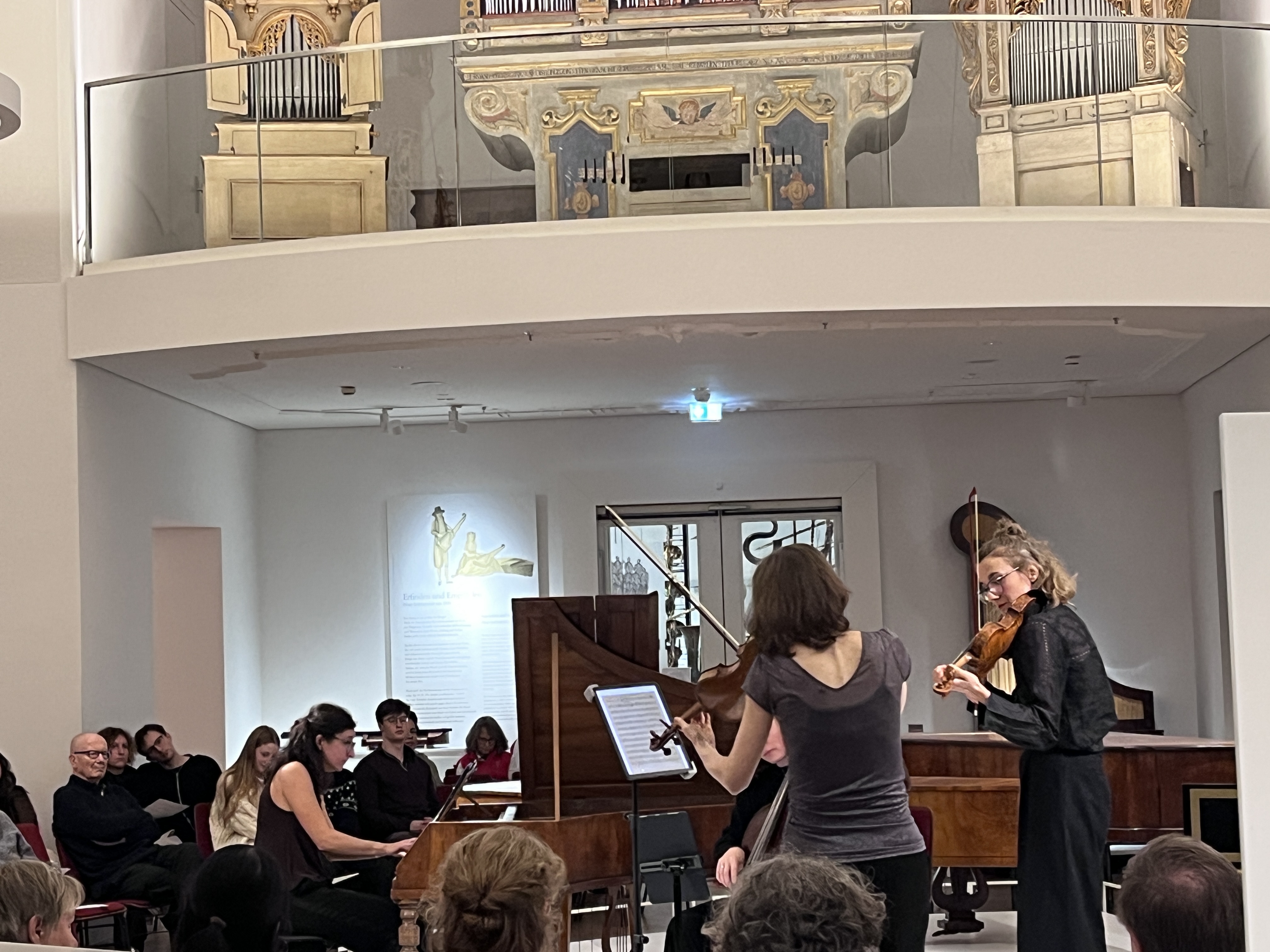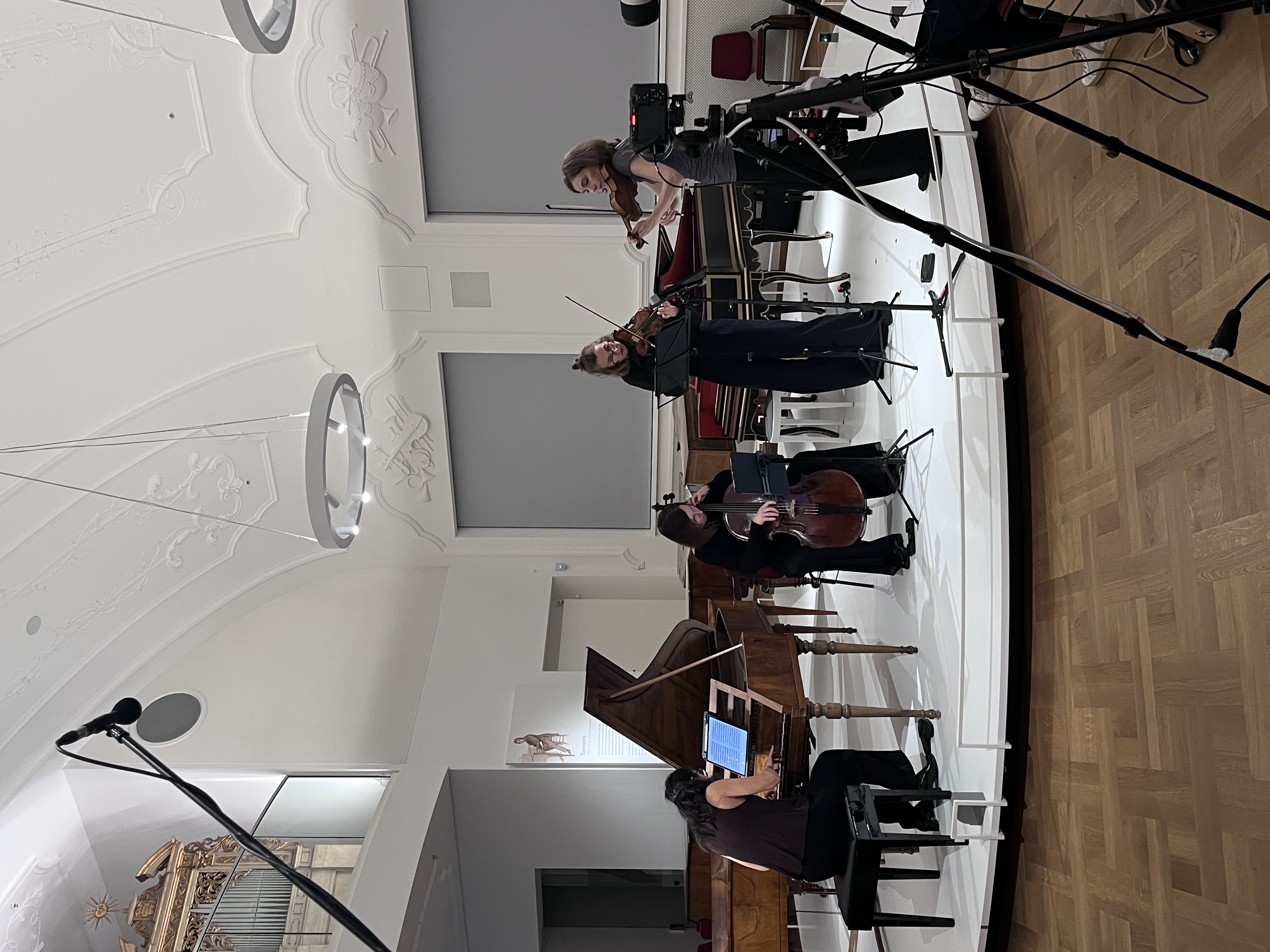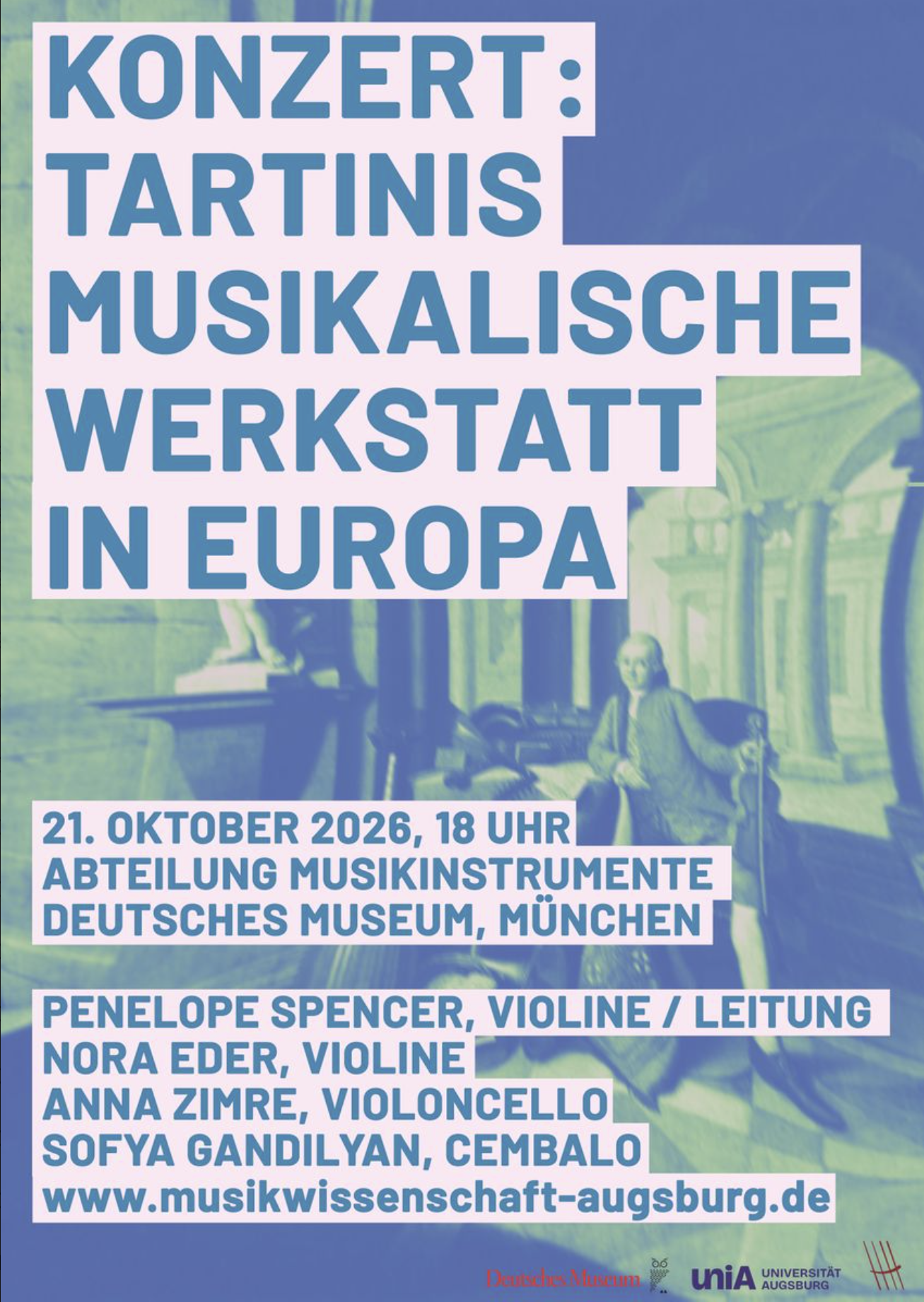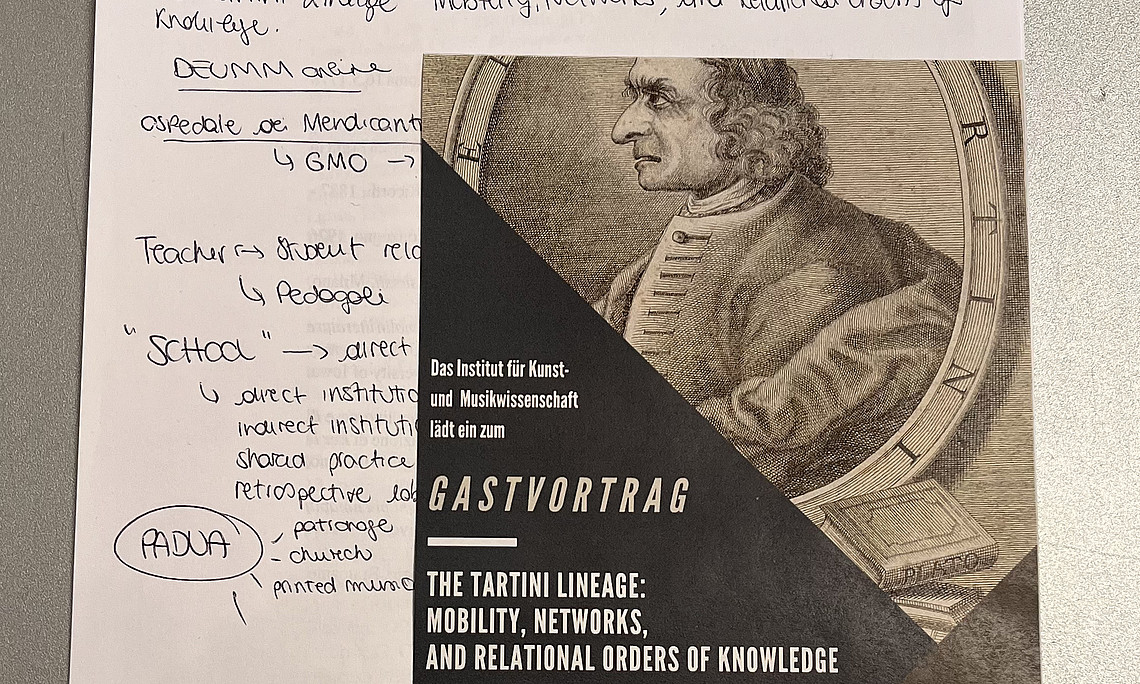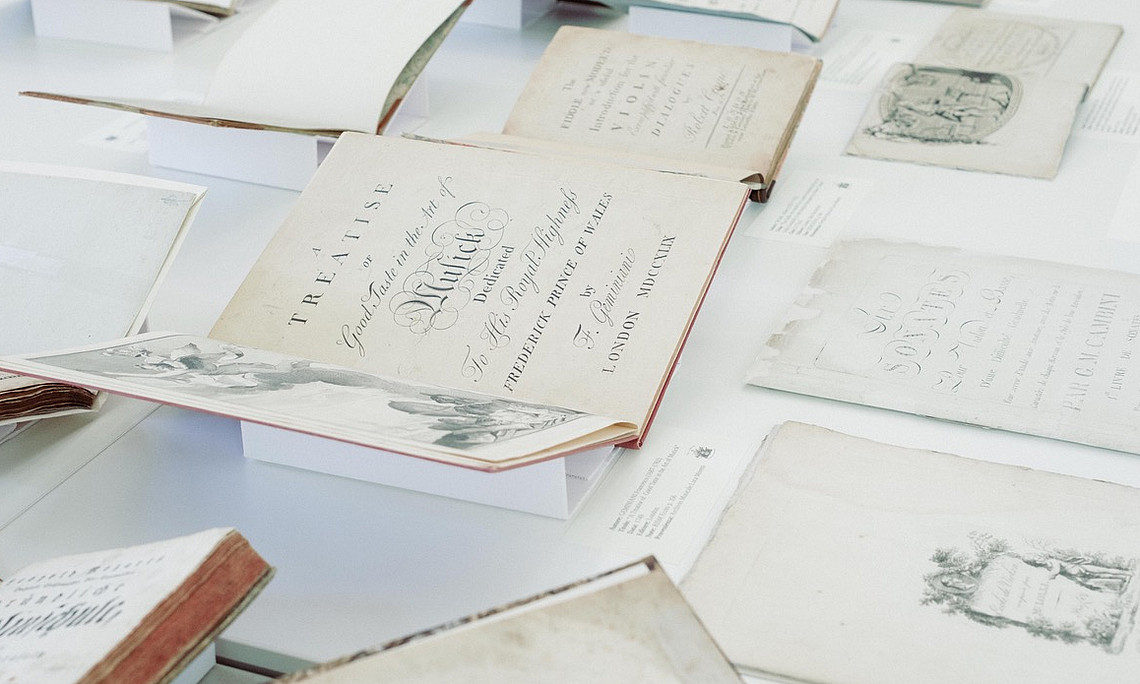



On 21 October 2026 at 6.00 pm, the concert entitled ‘Tartini’s Musical Workshop in Europe’ took place in the Collection of Musical Instruments of the Deutsches Museum. This concert was organized by Andrea Zedler of the Augsburg team of the international Weave project TartinianS in Europe. The School of Nations and its Networks in collaboration with Silke Berdux, curator of the Collection of Musical Instruments of the Deutsches Museum.
Taking Tartini’s Aria del Tasso as its starting point, the concert focused in particular on compositions by pupils of his famous ‘School of Nations’ in Padua. The programme centred on works by Franz Carl and Johann Nepomuk Cröner, Wenzeslaus Wodiczka, Antonìn Kammel and Anders Wesström, whose lives and music were shaped by Tartini’s violin and compositional techniques.
Penelope Spencer (violin), Nora Eder (violin), Hanna Shcherbyna (cello) and Sofya Gandilyan (harpsichord and tangent piano) performed works composed at the Munich court, in the musically vibrant London of the 18th century, and in Stockholm. It became strikingly apparent that the composers did not merely adopt Tartini’s compositional techniques and stylistic devices and adapt their works to their respective performance contexts; some of Tartini’s pupils combined virtuoso violin playing with a clearer, more emotive musical language that already pointed the way towards the Classical period. This brought to life Giuseppe Tartini’s musical workshop, which stretched from Padua all the way to the far north of Europe. The historically informed performance of this evening took both the performance contexts and Tartini’s embellishment practice which he described in theoretical writings into consideration.
Talks by Berthold Over, Maria Schildt, Jana Spáčilová and Gesa zur Nieden provided introductions to the works, whilst Raoul Pasculli recited Italian texts that Tartini used as mottos for his compositions. Penelope Spencer explained the use of the specific violin bows that were employed, and Sofya Gandilyan outlined the distinctive features of the museum’s original tangent piano.
Andrea Zedler